
As a concerned member of the Nepali Canadian community, I express my deep concern and strong opposition to the recent actions taken by NRNA Canada regarding the public disclosure of private member information. This incident is not just a misstep – it is a serious violation of data privacy, member confidentiality, and basic ethical principles.
The release of personally identifiable information – including names, home addresses, phone numbers, email addresses, and even financial details – is deeply troubling. These details belong to over 6,000 individuals from our own community. They are not just numbers in a database; they are real people who trusted the organization with their private information. That trust has now been broken.
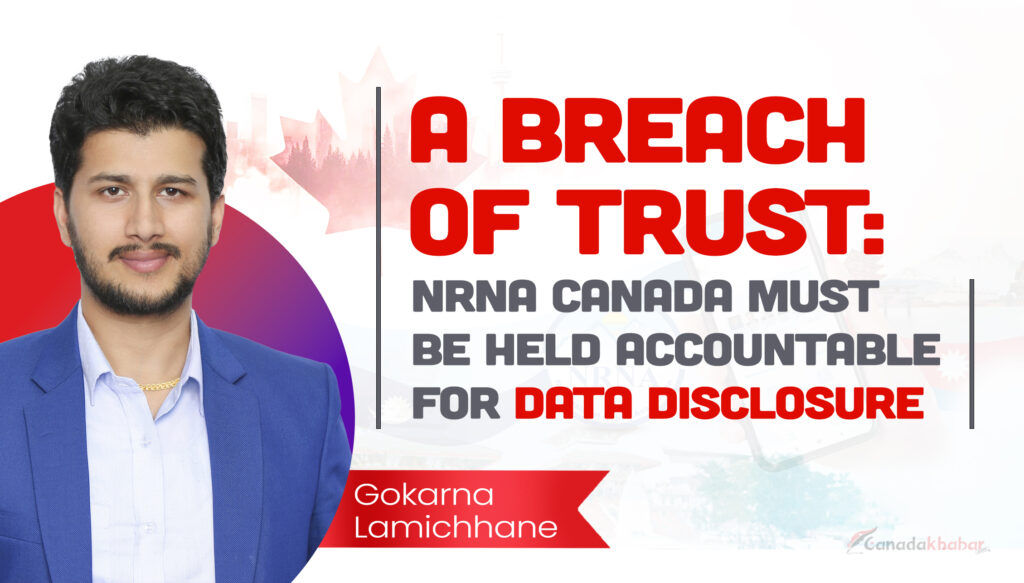
Because of this breach, many members are now afraid to engage with NRNA Canada. Some have already decided they will not renew or apply for membership again. This is a significant setback for an organization that claims to represent and protect the interests of the Nepali diaspora. The question must be asked: Who will take responsibility for this loss of trust? Who will be held accountable for the damage done?
What’s even more concerning is that several affected individuals are now exploring legal action. This should serve as a wake-up call to NRNA Canada that this matter is not only about poor judgment – it may also involve serious legal consequences.
If there were doubts about the validity of some memberships, they should have been handled internally through a confidential, fair, and transparent process. Instead, NRNA Canada chose to go public with unverified claims, causing unnecessary fear, division, and reputational damage. This is not the leadership we expect from an organization of this stature.
A related issue is the criticism surrounding multiple memberships paid with the same credit card. If such a practice was against policy, why did the system allow it in the first place? This points to a failure in planning, not wrongdoing by members. NRNA Canada must accept responsibility for not putting proper technical checks in place rather than blaming the very people it exists to serve.
We must also acknowledge the cultural and social context of our community. Many members join NRNA after being encouraged or guided by community leaders or candidates. Without that outreach, many would not participate at all. This is a well-known reality – not a reason for public shaming or political blame.
NRNA is the largest organization representing the global Nepali diaspora. With that position comes great responsibility. Sadly, this incident reflects a serious failure to meet that responsibility with maturity, care, and professionalism. Most importantly, the organization must recommit to the core values of transparency, fairness, respect, and unity. An organization that claims to represent a diaspora must lead with accountability – not controversy. It must protect its people – not expose them.
This is a critical moment for NRNA Canada. Let it be remembered not for division, but for a turning point where integrity, responsibility, and ethical leadership took the front seat.